
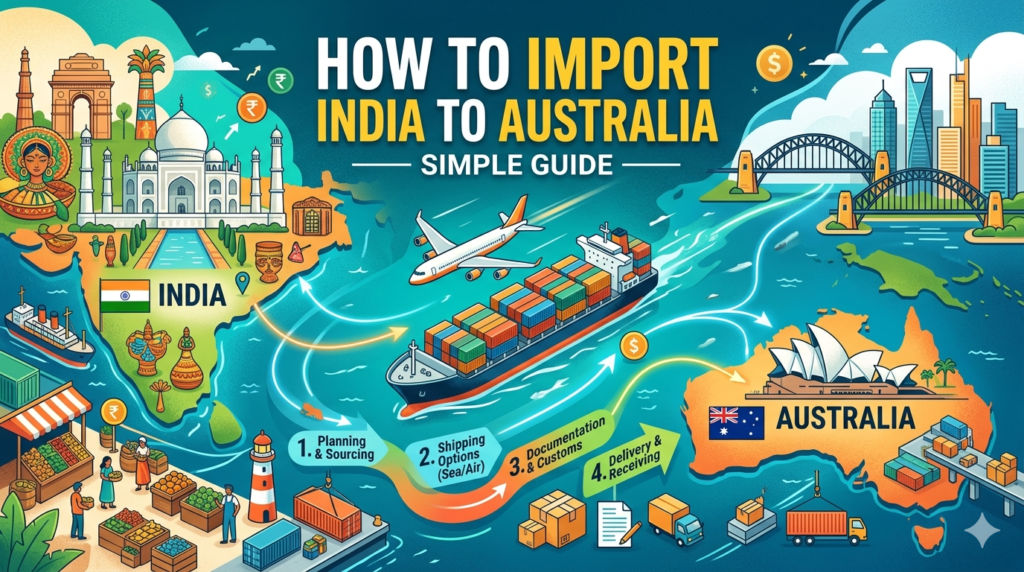
How Do You Import from India to Australia?
If you are planning to import from India to Australia, you are entering one of the fastest-growing trade corridors in the Asia-Pacific region. India is a major supplier of handcrafted products, home furnishings, leather goods, textiles, engineering products, and fashion accessories, while Australia continues to increase imports from international suppliers to meet growing consumer demand.
Whether you are a retailer, wholesaler, eCommerce seller, or distributor, understanding how to import from India to Australia can help you reduce costs, improve product quality, and build a reliable supply chain. From finding trusted suppliers and understanding customs regulations to choosing the right shipping method, every step plays a crucial role in successful importing.
In this comprehensive guide, we’ll explain the complete import process, documentation requirements, customs considerations, and sourcing best practices. We’ll also cover the best products to import from India to Australia, relevant trade insights, and how a sourcing partner like Panoramic Sourcing can simplify the entire process.
Why Import from India to Australia?
India has become a preferred sourcing destination for Australian businesses due to several advantages:
Competitive Manufacturing Costs
Indian manufacturers often offer highly competitive pricing compared to suppliers in many other countries. This allows Australian importers to improve margins while maintaining product quality.
Diverse Product Range
India exports thousands of product categories, including:
- Handcrafted products
- Home décor
- Furniture
- Leather goods
- Fashion accessories
- Textiles
- Jewelry
- Industrial products
- Packaging materials
Skilled Artisan Network
India is globally recognized for its handcrafted industries. Many Australian retailers source unique products that cannot easily be replicated elsewhere.
Growing Trade Relationship
The economic partnership between India and Australia continues to strengthen, creating more opportunities for businesses seeking reliable suppliers and long-term sourcing partnerships.
Step-by-Step Process to Import from India to Australia
Identify the Product You Want to Import
Before starting the import process, determine:
- Product category
- Target customer market
- Expected demand
- Compliance requirements
- Profit margins
Research Australia’s import regulations to ensure your product is permitted and meets local standards.
Find Reliable Indian Suppliers
One of the most critical steps when you import from India to Australia is supplier selection.
Look for suppliers that offer:
- Export experience
- Product certifications
- Quality control processes
- Consistent production capacity
- Transparent communication
Many importers face challenges with factory verification, quality consistency, and shipment delays. Working with a sourcing company can significantly reduce these risks.
How Panoramic Sourcing Helps
Panoramic Sourcing is an India-based sourcing company serving global clients. We specialize in:
- Handcrafted items
- Home furnishings
- Leather goods
- Fashion accessories
Our team assists buyers with:
- Supplier identification
- Factory verification
- Price negotiation
- Quality inspections
- Production monitoring
- Export documentation
- Logistics coordination
Request Product Samples
Never place a bulk order without testing samples.
Evaluate:
- Product quality
- Packaging standards
- Material specifications
- Workmanship
- Compliance requirements
Sample evaluation helps prevent costly mistakes later.
Negotiate Pricing and Terms
Discuss:
- Unit pricing
- MOQ (Minimum Order Quantity)
- Payment terms
- Lead times
- Packaging requirements
- Shipping responsibilities
Common international trade terms include:
- EXW (Ex Works)
- FOB (Free on Board)
- CIF (Cost Insurance Freight)
- DDP (Delivered Duty Paid)
Choose the option that aligns with your logistics capabilities.
Prepare Required Import Documents
When importing into Australia, several documents are typically required.
Essential Documents
Commercial Invoice
Contains:
- Product details
- Quantity
- Value
- Buyer and seller information
Packing List
Provides shipment information including:
- Package dimensions
- Weight
- Carton count
Bill of Lading or Air Waybill
Acts as proof of shipment and transportation contract.
Certificate of Origin
May be required for customs purposes and trade agreements.
Import Declaration
Australian customs authorities may require import declarations depending on shipment value and product category.
- Choose the Right Shipping Method
Shipping costs significantly affect profitability.
Air Freight
Best for:
- Small shipments
- Urgent orders
- High-value products
Advantages:
- Faster delivery
- Lower transit risk
Disadvantages:
- Higher costs
Sea Freight
Best for:
- Large-volume orders
- Cost-sensitive shipments
Advantages:
- Lower cost per unit
- Better for bulky goods
Disadvantages:
- Longer transit times
Most businesses that regularly import from India to Australia use sea freight for larger commercial orders.
Customs Clearance in Australia
Upon arrival, shipments must pass Australian customs.
Key considerations include:
- Product classification
- Duties and taxes
- Biosecurity requirements
- Import permits (if applicable)
Certain products may require additional inspections or certifications before release.
Working with an experienced customs broker can simplify this process.
Common Pitfalls to Avoid
- Choosing suppliers without proper verification
- Skipping product samples before placing bulk orders
- Overlooking Australian import regulations and compliance requirements
- Focusing only on the lowest price instead of quality and reliability
- Ignoring quality inspections before shipment
- Using unclear payment terms and purchase agreements
- Choosing the wrong Incoterms (EXW, FOB, CIF, DDP)
- Underestimating shipping, duties, taxes, and other landed costs
- Failing to prepare complete and accurate import documents
- Not accounting for production and shipping delays
- Ignoring packaging and labeling requirements
- Relying on a single supplier without backup options
- Failing to verify product certifications and compliance standards
- Neglecting regular communication with suppliers
- Managing sourcing without local quality control or supplier oversight
- Not working with experienced sourcing or customs professionals when needed
Best Products to Import from India to Australia
Many Australian importers focus on categories where India offers strong manufacturing expertise.
Home Furnishings
- Cushions
- Throws
- Rugs
- Table linen
- Decorative accessories
Handcrafted Products
- Wooden handicrafts
- Metal crafts
- Handmade décor
- Gift items
Leather Goods
- Bags
- Wallets
- Belts
- Travel accessories
Fashion Accessories
- Scarves
- Jewelry
- Fashion bags
- Sustainable accessories
Furniture
- Wooden furniture
- Accent furniture
- Artisan-crafted pieces
Textiles
- Cotton products
- Sustainable fabrics
- Home textile collections
These categories continue to perform well in the Australian retail and wholesale markets.
Understanding Australia Imports List
The Australia imports list includes a wide range of consumer and industrial products sourced globally.
Major import categories include:
- Machine
- Electronics
- Vehicles
- Textiles
- Furniture
- Consumer goods
- Home décor
- Industrial equipment
India continues to expand its share in several of these product categories due to competitive pricing and manufacturing capabilities.
Products Export to Australia from India
Some of the leading products export to Australia from India include:
- Pharmaceuticals
- Textiles
- Apparel
- Engineering goods
- Leather products
- Furniture
- Home décor
- Handicrafts
- Gems and jewelry
- Agricultural products
For retailers and distributors, handcrafted and lifestyle products remain particularly attractive due to their uniqueness and value proposition.
Quality Control: The Most Overlooked Import Factor
Many import challenges arise from insufficient quality checks.
Professional inspections help verify:
- Product specifications
- Packaging quality
- Quantity accuracy
- Label compliance
- Shipment readiness
At Panoramic Sourcing, we conduct supplier evaluations and quality inspections to help buyers reduce risks before goods leave India.
India Australia Trade Statistics
Recent India Australia trade statistics indicate continued growth in bilateral trade.
Key trends include:
- Rising demand for Indian manufactured products
- Increased sourcing diversification among Australian importers
- Growth in lifestyle, furniture, and home furnishing categories
- Expansion of business partnerships between Indian exporters and Australian buyers
These trends make India an increasingly attractive sourcing destination for Australian businesses seeking long-term supply chain stability.
How a Sourcing Company Simplifies Imports
Many overseas buyers underestimate the complexity of international sourcing.
A sourcing company can help with:
Supplier Verification
Avoid dealing with unverified factories.
Price Negotiation
Leverage local market knowledge for better pricing.
Production Monitoring
Track manufacturing progress and timelines.
Quality Assurance
Identify issues before shipment.
Logistics Coordination
Manage freight and export procedures.
Communication Support
Bridge cultural and language gaps.
This allows buyers to focus on sales and business growth instead of operational challenges.
Why Global Buyers Choose Panoramic Sourcing
Panoramic Sourcing works with international buyers looking to source quality products from India.
Our expertise includes:
- Handcrafted items
- Home furnishings
- Leather goods
- Fashion accessories
We help global clients through:
- Product sourcing
- Factory audits
- Supplier management
- Quality inspections
- Export coordination
- Shipment support
Our goal is to make importing from India simple, transparent, and scalable.
Frequently Asked Asked (FAQ)
How do I import from India to Australia?
To import from India to Australia, you need to identify products, find reliable suppliers, obtain samples, finalize pricing, prepare export documents, arrange shipping, and complete Australian customs clearance procedures.
What are the best products to import from India to Australia?
The best products to import from India to Australia include home furnishings, handcrafted products, leather goods, furniture, textiles, and fashion accessories due to India’s strong manufacturing capabilities and competitive pricing.
What products export to Australia from India?
Major products export to Australia from India include textiles, furniture, handicrafts, leather goods, engineering products, pharmaceuticals, jewelry, and consumer goods.
Where can I find Australia import data?
Australia import data can be obtained from official government trade databases, customs authorities, international trade organizations, and commercial market research platforms.
What does the Australia imports list include?
The Australia imports list includes machinery, vehicles, electronics, textiles, furniture, industrial products, consumer goods, and lifestyle products sourced from countries worldwide.
What do India Australia trade statistics show?
Recent India Australia trade statistics show growing bilateral trade volumes, increasing demand for Indian manufactured products, and expanding sourcing opportunities for Australian businesses.
What are the best products to export from Australia to India?
The best products to export from Australia to India commonly include minerals, agricultural products, education services, food products, and industrial raw materials.
Conclusion
Learning how to import from India to Australia is easier when you understand the sourcing process, customs requirements, supplier selection, and logistics options. India offers a vast range of quality products at competitive prices, making it an attractive sourcing destination for Australian businesses.
Whether you are importing handcrafted products, home furnishings, leather goods, or fashion accessories, success depends on choosing the right suppliers and maintaining strong quality control practices.
By partnering with an experienced sourcing company like Panoramic Sourcing, buyers can reduce risks, improve product quality, and build reliable long-term supply chains.
If you’re planning your next sourcing project, now is an excellent time to explore the opportunities available through India-Australia trade.