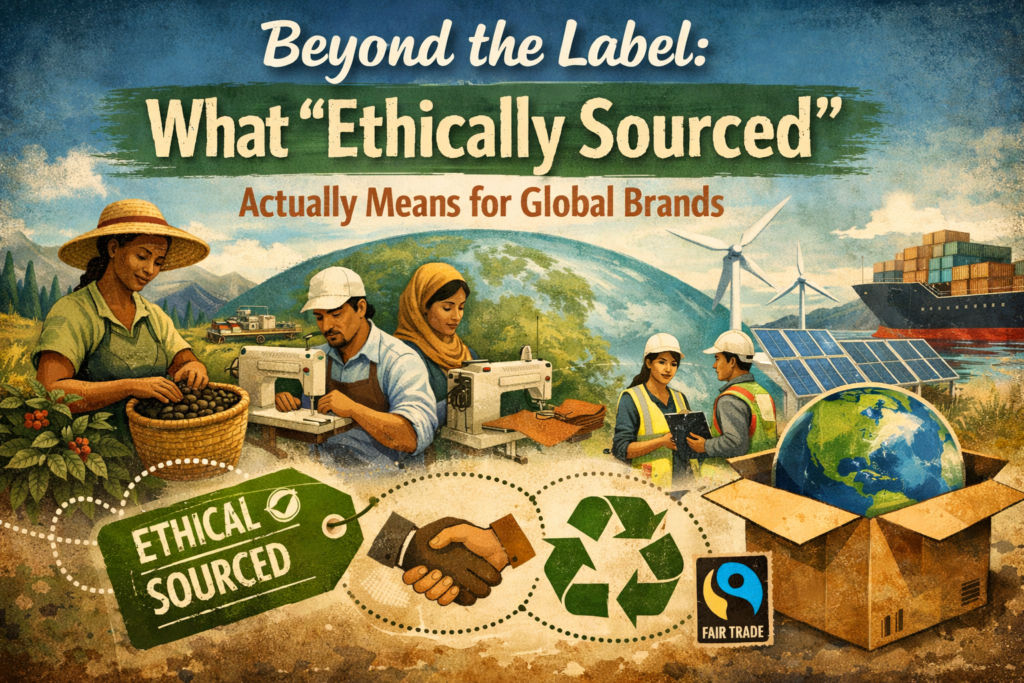
Beyond the Label: What “Ethically Sourced” Actually Means for Global Brands
In today’s rapidly shifting trade landscape, the term ethically sourced has evolved from a niche marketing trend into a non-negotiable standard for any brand with global ambitions. For companies operating across the USA, UK, and beyond, supply chain integrity is the cornerstone of long-term scalability and consumer trust. At Panoramic Sourcing, we understand that global clients require more than just a certificate; they need a transparent, verifiable framework that protects their reputation at every link of the chain. By prioritizing human rights and fair labor, we help you transform ethical procurement into a powerful competitive advantage.
Introduction: The New Global Mandate
In the modern marketplace of the USA and UK, a product is no longer judged solely by its price or quality. Today’s high-stakes global economy demands integrity. When a brand claims its products are ethically sourced, it is making a profound promise to its consumers, investors, and regulators.
However, for many global enterprises, “ethical sourcing” remains a vague buzzword. At Panoramic Sourcing, we believe that to stay competitive and compliant, brands must look beyond the green leaf icons and gold-stamped labels. We need to understand the structural DNA of a truly transparent supply chain. This blog explores the technical, social, and economic layers of ethical procurement and why it is the ultimate ROI driver for the modern brand.
What Does “Ethically Sourced” Really Mean?
At its core, an ethically sourced product is one that is manufactured and reached the consumer through a process that respects human rights, ensures fair labor practices, and minimizes environmental harm. However, the definition shifts as we move from basic compliance to true social impact.
1.Social Accountability and Human Rights
This is the most critical pillar. It involves ensuring zero tolerance for child labor, forced labor, or modern slavery. For global brands, this is a legal minefield. The UK Modern Slavery Act and the U.S. Uyghur Forced Labor Prevention Act (UFLPA) have made it clear: if you cannot prove your goods are ethically sourced, they will be seized at the border.
2.Economic Equity and Living Wages
Ethical sourcing goes beyond paying the legal minimum wage, which in many developing nations is not enough to survive. To be truly ethically sourced, a supply chain must strive for “Living Wages”—compensation that covers food, housing, healthcare, and education for the worker and their family.
3.Environmental Stewardship
While “green” is often categorized as sustainability, you cannot have an ethical supply chain that destroys local ecosystems. Sourcing materials in a way that protects biodiversity and reduces the carbon footprint of transport is a key component of the ethical framework.
Why Global Brands are Shifting Toward Ethical Procurement
The transition to ethically sourced inventories is not just a moral choice; it is a strategic business necessity for companies in Western markets.
Risk Mitigation and Brand Reputation
In the age of social media, a single report of labor exploitation can destroy decades of brand equity overnight. Global brands are now held accountable for the actions of their third-party suppliers. By ensuring every component is ethically sourced, you insulate your brand from PR disasters, consumer boycotts, and “cancel culture.”
Regulatory Compliance in USA and UK
Governments are tightening the noose on opaque supply chains. In the USA, the Customs and Border Protection (CBP) is increasingly active in issuing Withhold Release Orders (WROs). In the UK, transparency in supply chains is a mandatory part of corporate reporting. Provenance is no longer optional; it is a requirement for market entry.
Increased ROI and Consumer Loyalty
Studies consistently show that Gen Z and Millennial consumers in the USA and UK are willing to pay a premium for brands they trust. An ethically sourced certification serves as a powerful conversion tool. It moves your product from a “commodity” to a “value-driven” choice, fostering deep brand loyalty.
The Challenges of Global Sourcing
If being ethically sourced was easy, every company would do it. The reality of global trade is complex. When a brand sources from multiple continents, maintaining visibility into “Tier 2” or “Tier 3” suppliers—the people who provide raw materials to your direct manufacturers—becomes incredibly difficult.
Global clients often face:
- Cultural and Language Barriers: Misunderstandings of local labor laws.
- Shadow Factories: Unauthorized subcontracting where ethical standards are ignored.
- Audit Fatigue: Suppliers being overwhelmed by different standards, leading to falsified records.
This is where Panoramic Sourcing bridges the gap. As a global partner, we understand that “ethical” looks different in different regions, but the standard for excellence must remain universal.
How to Verify Your Supply Chain is Truly Ethical
To move “beyond the label,” brands should implement a robust verification framework that combines technology with “boots on the ground.”
Independent Third-Party Audits
Don’t take a supplier’s word for it. Utilize unannounced, third-party audits such as SEDEX (SMETA) or SA8000. These audits look at payroll records, fire safety, and interview workers privately to ensure that the ethically sourced claims are reality-based.
Traceability Technology
Utilize blockchain or advanced ERP systems to track a product from the raw material stage to the final warehouse. Knowing exactly where your cotton was picked or your minerals were mined is the only way to claim a product is 100% ethically sourced.
Direct Relationship Management
The most successful global brands don’t just “buy” from suppliers; they partner with them. By investing in supplier development and long-term contracts, you provide the financial stability a factory needs to maintain ethical standards.
The Panoramic Sourcing Advantage
Panoramic Sourcing doesn’t just find suppliers; we build sustainable partnerships. We deal exclusively with global clients who demand the highest standards of integrity. Our mission is to ensure that your “ethically sourced” label is backed by hard data, transparent audits, and a clean conscience.
We provide:
- Global Compliance Mapping: Aligning your sourcing with both US and UK regulations.
- On-Site Inspections: Real-time monitoring of production facilities.
- Strategic Procurement: Finding the balance between competitive pricing and ethical requirements.
By aligning your brand with ethical practices today, you are not just checking a compliance box—you are future-proofing your business for a world that values people and the planet as much as profit.
Frequently Asked Questions (FAQs)
Q1.What is the difference between sustainable and ethically sourced?
While often used interchangeably, “sustainable” usually refers to the environmental impact (eco-friendly materials, waste reduction), whereas ethically sourced focuses primarily on the human element, such as fair wages, safe working conditions, and the absolute absence of forced or child labor.
Q2.Is ethical sourcing more expensive for global brands?
Initially, auditing and selecting premium suppliers may have a higher upfront cost. However, it significantly reduces the long-term costs associated with legal fines, supply chain disruptions, and brand damage. In the USA and UK, ethically sourced products also command higher retail prices, offsetting the procurement costs.
Q3.How do I know if my supplier is truly ethical?
You must look for recognized international certifications and insist on full transparency. A truly ethically sourced supplier will provide documentation of their labor practices, allow for independent site visits, and be transparent about their own raw material providers.
Q4.Does the UK Modern Slavery Act affect US-based brands?
Yes. If your brand carries out any part of its business in the UK and meets certain turnover thresholds, you must publish an annual Modern Slavery Statement. Furthermore, many US regulations (like California’s Transparency in Supply Chains Act) mirror these requirements, making it best practice to adopt a global ethical standard.
The Future of Global Commerce: Integrity as an Asset
As we move toward a more transparent global economy, the definition of success for international brands is being rewritten. It is no longer enough to deliver a high-quality product at a competitive price; you must also prove that your journey to the shelf was paved with respect for human dignity and environmental health. For businesses targeting the USA and UK markets, ethically sourced procurement is the bridge between corporate survival and industry leadership.
Navigating the complexities of global supply chains requires more than just good intentions—it requires a strategic partner who understands the local nuances of manufacturing and the global demands of compliance. By moving beyond the label and implementing deep-tier transparency, your brand doesn’t just avoid risk; it builds a foundation of trust that resonates with the modern consumer.
At Panoramic Sourcing, we are dedicated to helping our global clients navigate this transition seamlessly. We believe that when a business is ethically sourced, everyone wins—from the artisan in the factory to the CEO in the boardroom. Let us help you turn your supply chain into your greatest brand story.
Book Your Strategic Sourcing Consultation with Panoramic Sourcing