
Shipping from India to USA: Complete Guide for Importers
If you are exploring shipping from India to USA for your business, you are likely comparing air vs sea, looking for the cheapest courier from India to USA, understanding customs and trying to avoid delays. For global buyers working with Indian suppliers or sourcing partners, understanding the international shipping process from India to USA is crucial to protect margins, timelines and product quality.
At Panoramic Sourcing, an India‑based sourcing company, the core work is simplifying this entire journey for overseas buyers of handcrafted items, home furnishings, leather goods, and fashion accessories so they receive consistent quality with predictable logistics.
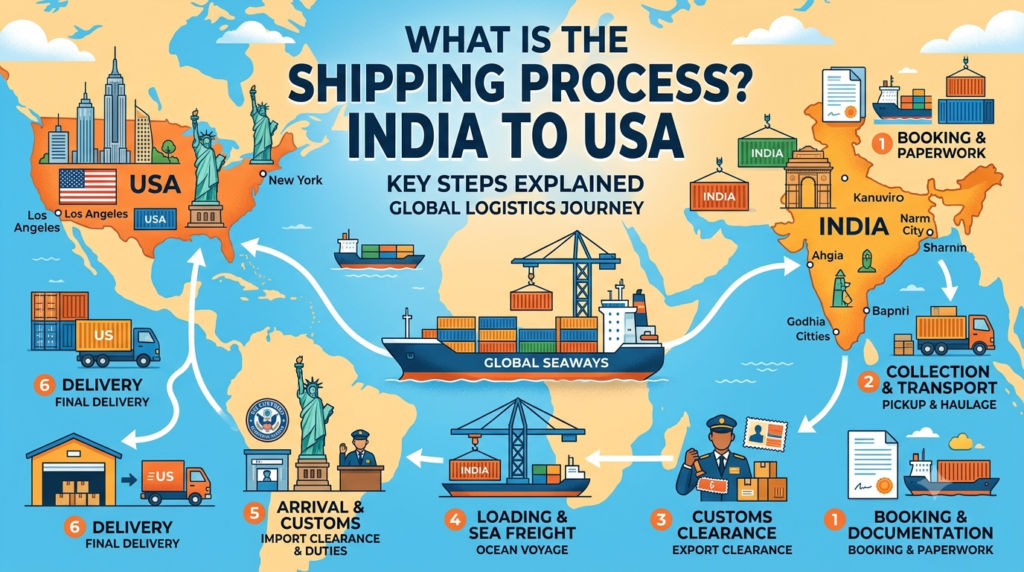
Overview of the Shipping Process from India to USA
When a buyer places an order with an Indian supplier, the full shipping process from India to USA typically moves through these stages:
Product sourcing, sampling, and final order confirmation
Production and pre‑shipment quality checks
Packing and labelling as per US and buyer requirements
Choosing mode of transport: freight shipping India to USA by sea or air
Export documentation and customs clearance in India
International transit and tracking
US customs clearance and payment of duties/taxes
Final delivery to warehouse, fulfilment centre, or retail location
For global brands and wholesalers, the key is having a clear, repeatable process with visibility at every step rather than reacting to problems once goods are already stuck at port or customs.
Common Shipping Terms:
To help you choose the most suitable shipping method, let’s first explore the common shipping terms used in global trade.
- LCL (Less Than Container Load):
A shipping option for moderate quantities of products that do not require a full shipping container.
- FCL (Full Container Load):
Perfect for larger shipments that require an entire shipping container for transportation.
- EXW (Ex-Works):
The seller’s responsibility is limited to making the goods available at their premises. The buyer assumes all costs and risks thereafter.
- FOB (Free on Board):
The seller is responsible for costs and responsibilities until the goods cross the ‘ship’s rail’ at the origin port, after which the buyer takes over.
- DDP (Delivered Duty Paid):
The seller bears all costs, responsibilities, and risks until the goods are delivered to the buyer’s location.
- CIF (Cost Insurance Freight):
The seller is responsible for costs, insurance, and freight until the goods reach the destination port.
Best options for shipping from India to USA
When deciding on the best shipping option for your goods via an Indian freight forwarder, consider the following factors:
- Air freight for smaller light shipments –
For smaller, time-sensitive shipments, air freight is the more cost-effective choice. Air shipments from Northern India, departing from Delhi Airport, ensure swift delivery to your destination.
- Sea freight for larger shipments –
For bulkier shipments, sea freight is the preferred option. When shipping from India, it is advisable to send goods to the East Coast for optimal efficiency.
- Port of departure for sea shipments-
The majority of sea shipments from India originate from the Port of Nhava Sheva (Mumbai), catering to various destinations worldwide. However, goods manufactured in the southern regions of India may have different departure points. Always consult your freight forwarder to find the nearest suitable option for your specific requirements.
Advantages of FOB terms
When obtaining costs from your suppliers, FOB terms are highly beneficial. Under FOB, the seller bears all costs and responsibilities, including export clearance, until the goods cross the ‘ship’s rail’ at the origin port. After this point, the buyer assumes all costs, responsibilities, and risks, ensuring transparency in cost assessment.
Considerations for ex-works transactions
While Ex-Works transactions are the easiest for sellers to perform, they can prove costly for buyers. As the buyer is responsible for moving the goods to the port and clearing customs, additional expenses and complexities may arise.
DDP and CIF – uncommon options in India
Delivered Duty Paid (DDP) and Cost Freight Insurance (CIF) terms are less common in India. Under DDP, the seller assumes all costs, responsibilities, and risks until the goods reach the buyer. Similarly, while CIF may appear cost-effective, it is crucial to note that it does not cover several destination charges, making careful evaluation essential.
Shipping Charges from India to the USA
The cost of shipping from India to the USA depends on several factors, including the shipping method, shipment size and weight, destination, product type, and required delivery time. As a result, the shipping cost from India to the USA per kg can vary significantly based on whether you choose courier services, air freight, or sea freight.
For larger commercial shipments, ocean freight is generally the most cost-effective option, while air freight offers faster delivery for urgent orders. Container shipping costs also vary depending on the container size, shipment volume, and destination port. Choosing the right shipping method can help reduce your overall logistics costs.
If you’re looking for the most affordable or efficient shipping solution, our team can help you compare options and find the best shipping rates from India to the USA based on your specific requirements.
Sea freight and air freight are the two most popular methods for transporting commercial goods from India to the USA. The comparison below explains the key differences between these shipping options and how you can optimize your shipping costs.
Sea vs. air freight: A price and speed comparison
Air shipping is faster, typically taking around one week from India to your destination in the US or elsewhere, depending on the location of your factory.
Conversely, sea shipping from the Port of Nhava Sheva to the US East Coast takes approximately 22 days, with destinations like Savannah/Jacksonville requiring around 28 days.
Optimizing Air Freight for Small Shipments
For smaller shipments, air freight can sometimes be a more economical choice than sea freight. Although the per-kilogram shipping rate is generally higher, air shipments avoid many of the fixed port and handling charges associated with ocean freight. The right option ultimately depends on your shipment size, budget, and delivery timeline.
When planning your shipment, choose suitable Incoterms (such as FOB) to clearly understand your shipping responsibilities and costs. Working with an experienced freight forwarder can also help you identify the most cost-effective shipping solution.
For sea freight, each shipment typically includes fixed expenses such as port handling, customs clearance, and documentation fees. These charges can significantly increase the cost of shipping small quantities. For example, shipping three separate consignments of 300 items may cost considerably more than combining them into a single shipment of 900 items, as the fixed charges are paid for each shipment.
Although air freight has a higher transportation cost per kilogram, it usually involves fewer fixed logistics charges and delivers goods several weeks faster than ocean freight. This makes it a practical option for product samples, urgent inventory replenishment, seasonal goods, or small commercial orders.
When importing goods into the USA, customs duties are determined by the product’s HS Code. Duty rates vary by product category, so it is important to classify your goods correctly and calculate these costs before shipping. Your freight forwarder or customs broker can assist with customs clearance and ensure your shipment complies with U.S. import regulations.
After customs clearance, any applicable duties, taxes, and shipping charges must be paid before the goods are released for final delivery. Proper planning and accurate documentation help minimize delays and unexpected costs.
Whether you’re importing products for retail, wholesale, or e-commerce businesses, understanding international shipping costs, customs requirements, and freight options can help you reduce logistics expenses, avoid unnecessary delays, and build a more efficient supply chain.
Common Mistakes Importers Should Avoid
When managing shipping from India to USA, many new importers repeat the same avoidable errors. A few important ones:
Selecting suppliers purely on lowest product price without evaluating logistics impact
Not clarifying Incoterms and responsibilities for freight, insurance, and customs paperwork
Ignoring packaging standards, leading to damages in bulky or fragile categories
Underestimating lead times, especially if combining production with sea freight
Not using professional pre‑shipment inspections
Choosing the absolute cheapest freight quote without checking reliability or hidden charges
Working with experienced partners and having a clear checklist for each shipment can prevent most of these issues.
FAQs
1. What is the basic international shipping process from India to USA?
The international shipping process from India to USA usually involves production, quality checks, export documentation, customs clearance in India, international transit by air or sea, US customs clearance, and final delivery to your warehouse or fulfilment centre. At each step, coordination between supplier, sourcing company, freight forwarder, and customs broker is essential to avoid delays and extra costs.
2. What is the cheapest courier from India to USA for samples?
The cheapest courier from India to USA for small samples or low‑value parcels is usually a consolidated economy courier solution offered by many logistics providers, rather than premium express. However, for high‑value or time‑critical samples, it may be better to use slightly higher‑priced express options with better tracking and reliability, especially when decisions depend on those samples reaching on time.
3. How do courier rates from India to USA work?
Courier rates from India to USA are generally calculated on the higher of actual weight or volumetric weight, plus any fuel surcharge and remote area charges. For regular shipments, negotiated contracts and volume commitments can reduce per‑kg rates, which is where a sourcing partner and freight aggregator can help buyers get more competitive pricing.
4. Is freight shipping India to USA by sea always cheaper than air?
In most cases, freight shipping India to USA by sea offers a much lower per‑unit cost than air, particularly for bulk orders and heavy or bulky items like furniture and home textiles. However, if your volumes are very small or your timelines extremely tight, air freight or express courier might make more sense—even if the rate per kg is higher—because it protects sales and launch dates.
5. How long does shipping from India to USA usually take?
Transit times for shipping from India to USA depend on mode and route. Air freight and express shipments may take about 4–10 days door to door, while sea freight can take roughly 25–45 days from Indian port to US port plus time for customs and inland delivery. Building a timeline that includes production plus logistics buffer helps avoid stock‑outs and last‑minute air shipments.
6. What documents are needed for shipping process from India to USA?
For the shipping process from India to USA, typical documents include commercial invoice, packing list, Bill of Lading or Air Waybill, Certificate of Origin, and any compliance certificates required by product category. For certain payment terms, additional paperwork like insurance certificates or bank documents may be needed, which your forwarding and sourcing teams should coordinate in advance.
7. How should I handle documents shipping from India to USA?
When original documents are critical (for example, for bank negotiations or cargo release), documents shipping from India to USA should go through reliable tracked express courier services. These couriers ensure timely delivery and provide tracking so you can align document arrival with vessel or flight arrival, avoiding clearance delays.
8. Can Panoramic Sourcing manage the complete shipping process from India to USA for my brand?
Yes, Panoramic Sourcing can manage the complete shipping process from India to USA as part of a full‑service sourcing solution—from factory identification and quality checks to freight coordination and shipment tracking. This is particularly valuable for global clients in categories like handcrafted items, home furnishings, leather goods, and fashion accessories who want a single, accountable partner on the ground in India.
Conclusion
When managed well, shipping from India to USA becomes more than a back‑office task—it becomes a strategic advantage. Reliable lead times, controlled freight costs, and consistent product quality allow you to:
Launch collections on schedule
Reduce stock‑outs and emergency air shipments
Improve margins through smart mode selection and consolidation
Free your team from daily fire‑fighting on logistics issues
For global brands, retailers, and wholesalers sourcing from India, partnering with a specialized India‑based company like Panoramic Sourcing means you do not have to become an expert in every detail of the shipping process from India to USA. Instead, you gain a local team dedicated to aligning products, factories, and logistics around your business goals.
If you are planning to start or scale your sourcing from India and want support with both products and logistics, reaching out to a structured sourcing partner is often the fastest and safest way to move forward.