
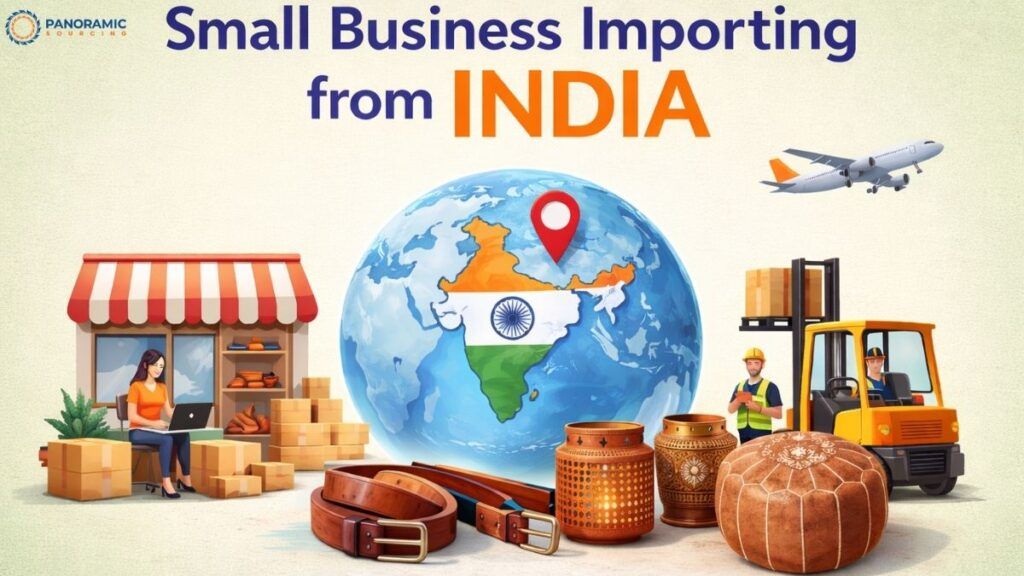
Small Business Importing from India: Complete Starter Guide
Why Small Businesses Are Importing from India
For entrepreneurs and growing brands, Small Business Importing From India has become a practical and strategic way to build competitive product lines without excessive capital investment. India offers a unique advantage for small businesses: access to skilled manufacturing, flexible production volumes and a wide range of export-ready products.
Unlike traditional sourcing hubs that often demand large minimum order quantities (MOQs), Indian manufacturers are more open to pilot orders, customization and gradual scaling. This makes importing from India especially attractive for startups, private label brands and niche retailers looking to test markets before committing heavily.
This guide breaks down the complete process of importing from India for small businesses, focusing on costs, supplier selection, logistics, compliance and risk management—without unnecessary complexity.
Why India Works for Small Business Importing From India
Cost Efficiency Without Compromising Quality
India’s labor expertise and raw material availability allow manufacturers to produce competitively priced goods while maintaining acceptable international quality standards. For small businesses, this balance is critical when margins are tight.
Low MOQ Flexibility
One of the biggest challenges for small importers is meeting high MOQs. Many Indian exporters are open to lower quantities, especially for handmade, lifestyle, décor, leather and textile products.
Broad Product Diversity
India supports a wide range of export categories, allowing small businesses to diversify quickly:
Leather bags, wallets and accessories
Handicrafts and home décor
Sustainable textiles and organic fabrics
Metalware and wooden lifestyle products
Customized specialty items
This diversity enables experimentation without relying on a single product category.
Legal and Compliance Basics for Small Business Importing From India
Import Readiness in Your Country
Before placing orders, small businesses must ensure they are legally permitted to import.
USA: EIN (Tax ID) and Customs Bond
UK & EU: EORI number
Business registration must allow international trade
Skipping this step can result in shipment delays or customs rejection.
Export Legitimacy on the Indian Side
Every Indian exporter must hold an Import Export Code (IEC), which authorizes them to ship goods internationally. Verifying this is a foundational step in Small Business Importing From India.
Exporters without a valid IEC cannot legally export goods, exposing buyers to shipment seizure and financial loss. IEC details can be verified through the official portal of the Directorate General of Foreign Trade.
Find the Right Suppliers as a Small Business Importing From India
Where Small Businesses Usually Start
Most beginners begin supplier discovery through online B2B platforms. While these platforms are useful for initial research, they should not be the final decision point.
More reliable channels include:
Industry referrals
On-ground sourcing partners in India
Evaluating Supplier Suitability
For small businesses, supplier reliability matters more than factory size. Key evaluation points include:
Prior export experience
Willingness to work with small MOQs
Clear communication and documentation accuracy
Consistent production quality
Supplier vetting reduces risks that can cripple a small business early on.
Pricing, Costs and Incoterms Explained Simply
Understanding the True Landed Cost
A common mistake in small business importing from India is focusing only on the factory price. The real cost includes:
Product manufacturing cost
Inland transport in India
International freight
Insurance
Customs duties
Destination handling charges
Ignoring these elements can erase profits quickly.
Incoterms and Risk Allocation
Incoterms define who pays for what during shipping. Small businesses often start with:
FOB (Free on Board) – balanced control and cost
EXW (Ex Works) – cheapest upfront, higher risk
Choosing the right Incoterm protects cash flow and clarifies responsibility.
Sampling and Product Development for Small Business Importing From India
Why Sampling Is Non-Negotiable
A physical sample is the quality benchmark for production. Approving a final “gold sample” before bulk manufacturing prevents disputes and misunderstandings.
For small businesses, skipping sampling to save money often leads to costly mistakes later.
Managing Development Timelines
Production timelines in India may be affected by:
Raw material availability
Seasonal demand
National holidays and festivals
Building buffer time into schedules is essential for smooth operations.
Shipping and Logistics for Small Business Importing From India
Choosing the Right Shipping Mode
Shipping method selection depends on order size and urgency:
LCL (Less than Container Load) – ideal for small orders
FCL (Full Container Load) – cost-effective at scale
Air Freight – suitable for samples or urgent shipments
Most beginners in small business importing from India start with LCL shipments to manage risk.
Working with Freight Professionals
Freight forwarders experienced in India exports help manage bookings, documentation and customs coordination. This reduces errors and unexpected costs.
Quality Control and Risk Management
Pre-Shipment Inspections
Inspections verify quantity, workmanship and packaging before goods leave the factory. This step is especially critical for small businesses, where a single bad shipment can disrupt operations.
Fixing issues at origin is significantly cheaper than handling disputes after arrival.
Documentation Accuracy
Accurate commercial invoices, packing lists and shipping documents reduce customs delays and inspection risk. Documentation discipline is often overlooked but highly impactful.
Payment Planning and Cash Flow Management for Small Importers
One of the most underestimated challenges in Small Business Importing From India is cash flow timing. Importing requires payments to be made weeks—or even months—before products generate revenue.
Small businesses should plan for:
Advance supplier payments
Shipping and insurance costs before dispatch
Customs duties payable at destination
Warehousing and last-mile delivery expenses
Structuring payments carefully helps protect working capital. Many small importers start with partial advance payments combined with balance payments after inspection or before shipment. This approach balances supplier confidence with buyer risk management.
Maintaining a clear payment schedule aligned with production milestones prevents cash strain and improves supplier relationships over time.
Record keeping and Compliance for Long-Term Stability
Importing does not end once goods arrive. Proper documentation storage is a critical but often ignored part of small business importing from India.
Small businesses should retain:
Commercial invoices
Packing lists
Bills of lading or airway bills
Inspection reports
Customs clearance documents
In the United States and other major markets, import records must be retained for multiple years. Organized recordkeeping protects businesses during audits, chargebacks, or supplier disputes.
Good documentation discipline also makes future imports faster, as freight forwarders and customs brokers can reference prior shipments to reduce errors and delays.
Scaling Sustainably as a Small Importer
Once initial shipments are successful, small businesses can scale by:
Increasing order volumes gradually
Negotiating better pricing
Expanding product lines
Optimizing logistics and storage
India’s manufacturing ecosystem supports long-term growth when relationships are managed professionally.
Panoramic Sourcing: A Trusted Partner for Small Businesses
Panoramic Sourcing specializes in supporting Small Business Importing From India with structure and transparency.
With an on-ground presence in India, we act as your operational extension, helping small businesses reduce risk while improving execution.
Our support includes:
Verified supplier sourcing
Factory audits and background checks
Sampling coordination
Pre-shipment quality inspections
Export documentation and logistics support
By bridging the gap between small businesses and Indian manufacturers, we make importing predictable and scalable.
Conclusion
Small business importing from India is not about chasing the lowest price—it is about building a reliable, compliant and scalable sourcing system. When supplier verification, cost planning, quality control and logistics are aligned, importing becomes a growth driver rather than a risk.
With the right preparation and partners, India can become a long-term sourcing base that supports both profitability and brand differentiation.
FAQs
1. Is importing from India suitable for very small businesses?
Yes, India supports low MOQs and gradual scaling.
2. Do I need to visit India to start importing?
No, on-ground sourcing partners can manage verification and inspections.
3. What products are easiest for beginners to import?
Handicrafts, décor, leather accessories and textiles.
4. How long does the first import cycle take?
Typically 6–10 weeks from production to delivery.
5. What is the biggest risk for small importers?
Poor supplier verification and skipped quality checks.