
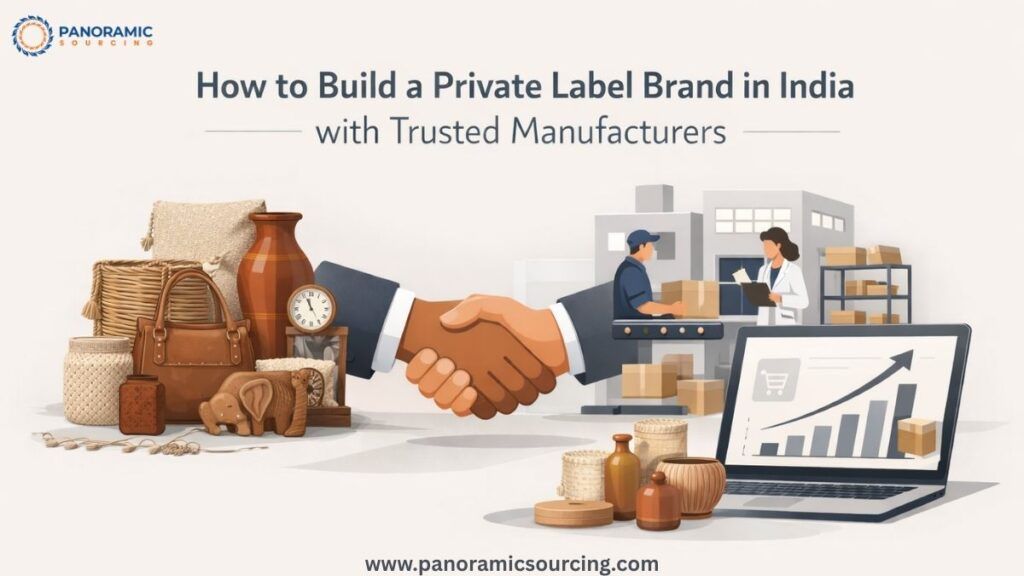
How to Build a Private Label Brand in India with Trusted Manufacturers
How to Build a Private Label Brand in India for USA and Global Buyers
For USA and international entrepreneurs, private label is no longer a side strategy — it is the core model behind many successful retail brands. Global buyers are moving away from anonymous trading and toward structured brand ownership. This shift explains why founders increasingly study How to Build a Private Label Brand in India as a long-term growth decision.
India has emerged as one of the most reliable sourcing destinations for American and global buyers. The country combines cost efficiency, artisan skill, scalable factories and export infrastructure built specifically for international trade. However, accessing that ecosystem requires professional guidance, reliable suppliers and strong operational control.
This is where sourcing partners like Panoramic Sourcing play a critical role. By connecting global buyers with vetted Indian manufacturers, they reduce risk, improve communication and create stable supply chains. Understanding how to build a private label brand in India is not just about finding a factory — it is about building a managed system that protects quality, margins and timelines.
Strategic Foundations: How to Build a Private Label Brand in India with Global Market Focus
Before contacting a supplier, international buyers must define their market strategy. Brands that succeed at how to build a private label brand in India begin with structured planning aligned to USA and global retail expectations.
American and European markets demand:
Consistent quality standards
Safety compliance
Professional packaging
Reliable delivery timelines
Transparent documentation
Your brand identity must match these expectations. Whether targeting Amazon USA, boutique retail, or international distribution, positioning determines supplier selection and cost structure. International buyers should also understand India’s export ecosystem before committing to production. The India’s Export and Manufacturing Overview explains how the country supports global trade, large-scale production and international supply chains — key factors when evaluating sourcing partnerships.
Panoramic Sourcing helps global buyers translate their product ideas into production-ready briefs. Clear technical documentation reduces sampling errors and ensures factories understand international standards from the beginning.
Factory Selection: How to Build a Private Label Brand in India with Verified Manufacturers
Supplier choice determines brand survival. Global buyers researching how to build a Private Label Brand in India must avoid the mistake of choosing factories based purely on price.
India operates through industry clusters:
Leather: Kanpur and Chennai
Fashion accessories: Delhi NCR and Mumbai
Home décor: Moradabad and Jodhpur
Handicrafts: Jaipur
Factories inside clusters benefit from specialized labor and efficient material supply chains. However, navigating these networks remotely is challenging for overseas buyers.
Panoramic Sourcing acts as an on-ground sourcing partner for USA and global brands. They audit factories, verify certifications, evaluate capacity and manage communication. This reduces the risk of unreliable suppliers and protects international buyers from costly production mistakes.
Partnership Approach in How to Build a Private Label Brand in India
Strong brands are built through partnerships, not transactions. International entrepreneurs committed to How to Build a Private Label Brand in India benefit from long-term supplier relationships.
Panoramic Sourcing bridges cultural and operational gaps between global buyers and Indian factories. They coordinate expectations, production timelines and quality requirements.
This partnership model delivers advantages such as:
Priority production scheduling
Faster sampling cycles
Material sourcing support
Improved negotiation leverage
Consistent communication
When factories see structured growth potential, they invest more effort in maintaining standards.
MOQ Strategy: How to Build a Private Label Brand in India Without Overexposure
Minimum order quantities often intimidate new brands. For global buyers learning how to build a private label brand in India, managing MOQs is a financial balancing act.
Indian factories require efficient batch production, but many now support pilot runs for emerging brands. Panoramic Sourcing negotiates phased production strategies that protect buyer cash flow while keeping factories profitable.
Effective MOQ management includes:
Starting with focused product lines
Consolidating materials
Running pilot batches
Planning repeat purchase cycles
Aligning packaging across SKUs
Transparent communication builds trust. Buyers who present realistic forecasts receive better flexibility and long-term cooperation.
Sampling Discipline for Global Quality Expectations
Sampling is a safety net, not an optional expense. Brands serious about how to build a private label brand in India use structured prototype testing before approving bulk production.
Each sampling round verifies:
Materials and finishing
Construction accuracy
Durability
Packaging integrity
Compliance labeling
Panoramic Sourcing coordinates sample review, feedback cycles and refinement. This reduces delays and ensures the final product matches USA and international retail expectations.
Skipping sampling to save money often results in defective shipments that cost far more to fix.
Quality Control Systems: How to Build a Private Label Brand in India with Consistency
Quality consistency defines brand credibility. Entrepreneurs who master How to Build a Private Label Brand in India implement inspection systems at every stage.
A professional framework includes:
Pre-production approval
In-line factory inspection
Final random inspection
Panoramic Sourcing provides third-party oversight, ensuring factories maintain agreed standards. Their on-ground presence protects global buyers who cannot personally supervise production.
Written specifications eliminate ambiguity. When expectations are measurable, accountability becomes objective.
Consistency builds retailer trust. USA and international markets punish quality failures quickly through returns and reviews.
Packaging Standards for Global Retail Presentation
Packaging is part of product quality. Global buyers researching how to build a private label brand in India must treat packaging as a strategic element.
Well-designed packaging:
Protects products in international transit
Reflects brand identity
Meets sustainability expectations
Improves customer perception
Panoramic Sourcing assists in sourcing packaging suppliers aligned with global eco-conscious trends. Presentation influences purchasing decisions as much as product design.
Scaling Production for USA and International Expansion
Growth requires structure. Brands that understand how to build a private label brand in India scale gradually to protect quality.
Panoramic Sourcing helps buyers diversify production across vetted factories while maintaining identical quality documentation. This reduces risk and ensures consistent output.
Forecasting demand carefully prevents overloading suppliers. Controlled scaling preserves margins and reputation simultaneously.
Professional brands grow through systems, not speed.
Panoramic Sourcing: On-Ground Support for USA and Global Private Label Buyers
For international entrepreneurs learning How to Build a Private Label Brand in India, the biggest challenge is not finding factories — it is managing them from thousands of miles away. Communication gaps, unclear specifications, delayed sampling and inconsistent quality are common risks for overseas buyers.
Panoramic Sourcing operates as an on-ground sourcing partner dedicated to helping USA and global brands build structured private label supply chains in India. Instead of buyers navigating factories blindly, Panoramic provides professional coordination between international expectations and local manufacturing realities.
Their support covers the full private label lifecycle:
Factory identification and vetting
Supplier audits and compliance verification
Sampling coordination and refinement
MOQ negotiation support
Quality inspection and production monitoring
Packaging and logistics alignment
For global buyers, this reduces uncertainty and protects capital. Learning how to build a private label brand in India becomes manageable when experienced sourcing professionals oversee production standards.
Panoramic Sourcing acts as a bridge — translating brand requirements into factory execution. Their on-ground presence ensures that products leaving India match the expectations of USA and international retail markets. This level of operational supervision is often the difference between a stable brand and a failed shipment.
Private label success is not only about creativity; it is about control. With structured sourcing support, global brands gain transparency, accountability and predictable outcomes.
Conclusion: A Managed Path to Global Brand Success
Learning How to Build a Private Label Brand in India is ultimately about operational discipline supported by reliable partners. India offers extraordinary manufacturing opportunity, but success depends on structured execution.
For USA and global buyers, Panoramic Sourcing acts as a strategic bridge — connecting brands with vetted factories, negotiating MOQs and enforcing quality systems. Their on-ground expertise transforms complex supply chains into manageable operations.
Start with planning. Build transparent partnerships. Protect quality relentlessly. Scale with intention. A private label brand built on reliable manufacturing earns global trust — and trust is the foundation of sustainable growth.
Frequently Asked Questions
1. Why should USA buyers work with a sourcing partner in India?
On-ground partners reduce communication gaps, verify factories and manage quality control.
2. Can startups work with Indian manufacturers?
Yes. With proper planning and MOQ negotiation, small brands can launch successfully.
3. How does Panoramic Sourcing support private label brands?
They audit factories, coordinate production, manage inspections and streamline communication.
4. Is quality inspection necessary for global shipments?
Absolutely. It prevents defective inventory and protects brand reputation.
5. How long does launch typically take?
Most private label projects require three to six months from concept to shipment.