
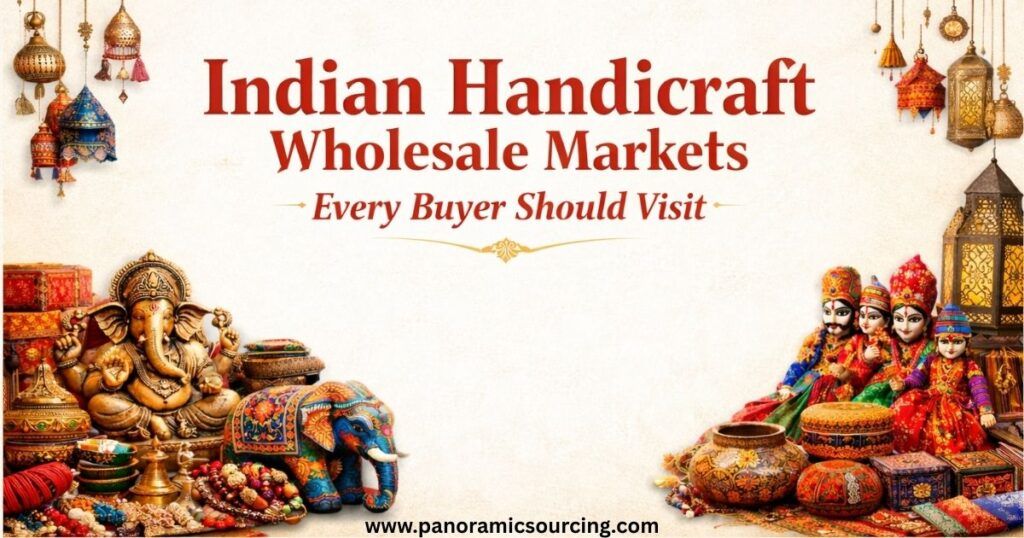
Indian Handicraft Wholesale Markets Every Buyer Should Visit
India has been the epicenter of the international handcraft trade and it has provided an unparalleled network of artisans, exporters and local masters of crafts. To foreign purchasers, it is not merely a trip to sourcing markets of Indian handicraft but a tactical asset in authenticity, margin benefit and story-telling of the product. India is an international sourcing powerhouse as its handicrafts are exported to more than one hundred countries according to the Export Promotion Council of Handicrafts (EPCH).
In terms of decor and furniture, textiles, as well as gifting collections, the craft infrastructure in India combines tradition with the export preparedness. Suppliers who know how to negotiate this ecosystem are able to establish long term supplier relationships that enhance their brand image internationally.
The reason as to why international buyers focus on Indian handicraft wholesale markets
International companies that operate in the retail sector have been on the hunt to purchase products that have a sense of culture and can be deemed as sustainable. That is why, Indian Handicraft Wholesale Markets are still one of the leading targets of professional customers. These markets have been structured in a way that suppliers are easily compared, prices are transparent and can be customized.
Key advantages include:
- Wholesale cost configurations of competition.
- Great product diversification in regions.
- Manufacturing OEM and own-label.
- Familiarity in export documentation.
- Strong artisan networks
The sourcing environment offers buyers the advantage of tradition as well as commercial efficiency that minimizes risk but enhances product uniqueness.
1. Cultural History of Indian Wholesale Handicraft Markets
Centuries of regional craftsmanship has made the Indian handicraft wholesale markets strong. Every group symbolizes a tradition of life, be it metal engraving, wood carving or marble inlay, or textile printing, which has been kept between generations.
It is a rich source of narrative that global brands can count on. Contemporary customers are attracted to the products, which hold a custom and touch. The premium retail markets are highly competitive in terms of hand made goods, which cannot be made by machines and therefore, are very appealing to the market.
2. Getting Authentic Products Right at the Artisan Clusters
Buyers can have a firsthand experience with workshops to understand the materials, techniques and labor practices. Transparency is a competitive advantage when there is sourcing of artisan clusters that are linked to Indian Handicraft Wholesale Markets.
This approach allows:
- In-time quality inspection.
- Faster product sampling
- Flexible customization
- Moral sourcing assurance.
- Well-established relationships with suppliers.
Direct access will minimize confusion and enhance trust in international supply chains.
Important Indian Wholesale Markets of Handicraft
The craft economy in India is regionalized, which enables consumers to make premeditated purchase expeditions. Knowledge on the origin of each type of product will facilitate easy sourcing of the Indian handicraft wholesale markets.
1. Moradabad: The Metalware and Decor central point in the Indian handicraft wholesale markets
Brass, aluminum and mixed-metal decor are internationally recognized in Moradabad. The city manufactures the decorative accents, tableware and lighting collections that are exported to the markets containing industrial accuracy and finishing using handcrafted finish.
Buyers visit Moradabad for:
- Decorative vases and bowls
- Metal candelabras and candle sticks.
- Industrial lighting
- Contemporary home accents
- Custom metal fabrication
It has a lot of production volume that is supported by its infrastructure without compromising on craftsmanship.
2. Saharanpur and Jodhpur: Indian The Main Wholesale Markets of Woodwork
The industry of wooden craft is dominated by Saharanpur and Jodhpur. The cities are crucial in terms of the Indian market of handicraft wholesale in the form of carved furniture and rustic ornaments.
Woodcraft major exports are:
- Hand-carved cabinets
- Vintage coffee tables
- Reclaimed wood furniture
- Storage trunks
- Decorative panels
- Sustainable shelving units
Their woodworking cultures merge artisanship with scalability, which is suitable in the global bulk orders.
3. Agra and Jaipur: Obtaining Hand-Painted Crafts and Marble Inlay
The high-end decorative craft segment in India is Agra and Jaipur. Buyers that source these cities find marble inlay, painted ceramics and heritage decor that can be used in the boutique retail.
Major products categories are:
- Marble tabletops
- Stone artifacts
- Hand-painted ceramics
- Decorative wall art
- Heritage gift items
Such collections are very attractive to luxury and lifestyle brands.
Renowned Articles of Indian handicraft Wholesale Markets
International buyers create complete catalog lines out of products obtained in the Indian handicraft wholesale markets. The range enables the retailers to match the decor, furniture and gifting with textiles under one umbrella theme of handmade.
The categories with high demand are:
- Home decor accents are hand-made.
- Wooden artisan furniture
- Decorative gift articles
- Hand-block printed textiles
- Ecofriendly produced natural fiber products.
This type of diversity allows companies to increase collection without changing sourcing areas.
Sourcing Indian Handicraft Wholesale Markets Panoramic Sourcing
Professional advice makes sourcing in India a complex task. Lots of buyers collaborate with specialists in order to explore Indian Handicraft Wholesale Markets in a safe and effective way.
1. Optimizing the Procurement and Quality Control in Local Hubs
Formal procurement minimizes the expensive errors. A sourcing partner arranges the inspections, supplier evaluation and approval of products to ensure consistency.
Benefits include:
- Ready-prepared supplier networks.
- Factory audits
- Sample verification
- Production tracking
- Negotiation support
This neglect helps safeguard both quality and margins.
2. International Exporting Logistics and Compliance
Export compliance is an important issue when exporting to foreign countries. Goods flow is facilitated by professional coordination to the destination of the goods.
Support areas include:
- Export documentation
- Packaging standards
- Customs compliance
- Freight coordination
- Shipment monitoring
Quality logistics planning saves the delivery schedules and brand image.
The best tips to follow when shopping at Indian handicraft wholesale markets
Effective sourcing needs planning and organization. Wholesale customers that can be strategic when approaching Indian handicraft markets attain better pricing and reliability of the suppliers.
1. Supplier Credibility and Ethical Sourcing
Large orders should always be done in due diligence. The buyers are required to visit the facilities, look at the certifications and confirm the labor standards before making commitments.
Important steps include:
- Workshop visits
- Reference checks
- Sample testing
- Contract clarity
- Compliance review
Good sourcing enhances lasting brand loyalty.
2. Dealing with Customization and High-Volume Ordering in Market Hubs
The Indian suppliers have a big benefit in customization, but clarity of documentation is necessary.
Best practices include:
- Written product briefs
- Prototype approval
- Defined MOQs
- Clear timelines
- Quality checkpoints
Formal communication eliminates misunderstandings in production.
FAQs
1. Can Indian handicrafts be used in the case of a private label brand?
Yes. There are numerous suppliers of OEM production that provide branding and packaging to be modified.
2. What is the average size of order by new buyers?
MOQs are not fixed and a large number of vendors will offer flexible entry volumes to create partnerships.
3. Is it possible that buyers demand unique designs?
Yes. The custom development is widespread and promoted in long-term partnerships.
4. How is quality ensured?
By inspection of factories, third-party inspection and pre-production accepted samples.
5. Are the eco-friendly options available?
Yes. A significant amount of artisan organizations is concerned with sustainable materials and responsible production.