
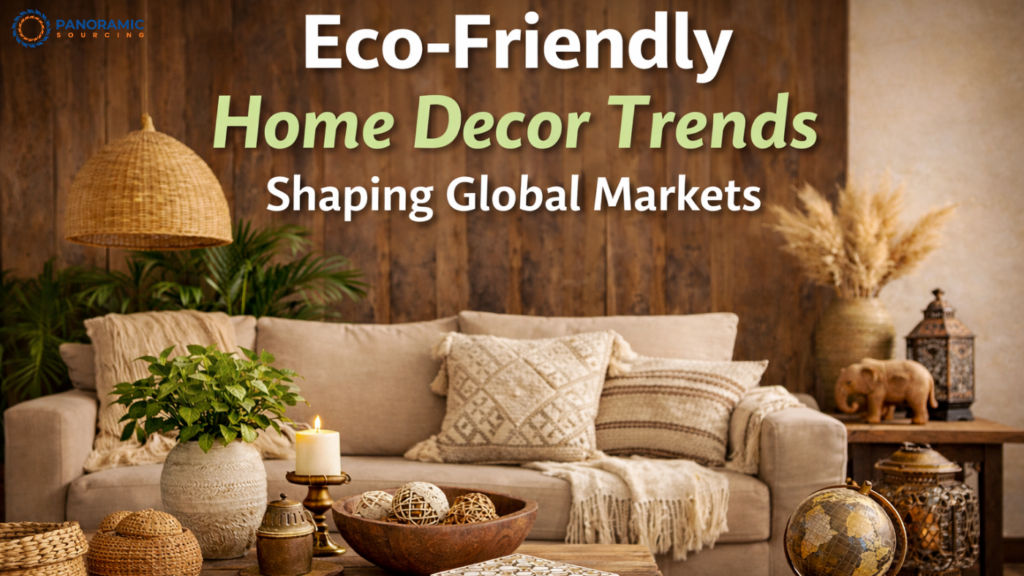
Eco Friendly Home Decor Trends Shaping Global Markets
The global home decor industry is undergoing a quiet revolution. Buyers are no longer satisfied with products that look beautiful but carry hidden environmental costs. Today’s interiors reflect values as much as style. The rapid rise of Eco Friendly Home Decor Trends shows how sustainability has become central to design, manufacturing and international trade.
Consumers want transparency. Retailers demand ethical sourcing. Governments introduce environmental regulations. Together, these forces are reshaping how decor is produced and where it is sourced. Sustainable design is no longer an aesthetic niche — it is the new standard shaping global markets.
1. The Green Revolution in Global Interiors
The transformation toward sustainability is visible across every segment of the decor industry. Designers, retailers and manufacturers are responding to a new generation of buyers who see environmental responsibility as non-negotiable.
The Rise of Conscious Consumerism
Modern consumers research materials, labor practices and supply chains before purchasing. They prefer fewer, higher-quality items that last longer. This shift supports artisan craftsmanship and ethical production systems that align with Eco Friendly Home Decor Trends.
Conscious consumerism is not driven by marketing. It is driven by cultural change. People increasingly view their homes as reflections of personal values.
Sustainability: From Niche to Necessity
What once existed as a specialty category has become mainstream. Major retailers now maintain sustainability targets and ethical sourcing requirements. According to the United Nations Environment Programme, sustainable consumption is critical to reducing global waste and emissions. You can explore broader sustainability frameworks outlined by UNEP.
This institutional backing ensures that eco friendly home decor trends are not temporary. They are embedded into long-term economic planning.
2. Dominant Trends Defining the Sustainable Market
Sustainable interiors are guided by identifiable design philosophies. These movements influence material choices, product lifecycles and purchasing behavior worldwide.
Minimalism and the “Slow Decor” Movement
Slow decor encourages intentional buying. Instead of filling spaces quickly, consumers invest in timeless, durable pieces. The emphasis shifts from quantity to longevity.
This philosophy supports Eco Friendly Home Decor trends by reducing waste and promoting mindful ownership. Minimalist interiors highlight craftsmanship and material integrity.
Biophilic Design: Bringing Nature Indoors
Biophilic design integrates natural elements into living spaces. Textures inspired by earth, stone, wood and fiber create emotional connections to nature.
Natural materials used in sustainable decor reinforce wellness and calm. Consumers associate eco-conscious interiors with psychological comfort and authenticity.
The Resurgence of Reclaimed and Recycled Materials
Reclaimed materials reduce the need for new resource extraction. Recycled wood, repurposed metals and reclaimed stone are now celebrated for their character.
This revival strengthens eco friendly home decor trends by transforming waste into aesthetic value.
3. Key Product Categories & Ethical Manufacturing Hubs
Certain product categories dominate sustainable sourcing because they combine renewable materials with artisan production. India remains a leading hub for these crafts.
Hand-Carved Sustainable Wood (Jodhpur & Saharanpur Clusters)
Woodcraft traditions in Jodhpur and Saharanpur rely on skilled hand carving rather than heavy industrial automation. Artisans use responsibly sourced wood and low-impact finishing techniques.
These workshops create decorative accents, functional furniture pieces and carved accessories aligned with eco friendly home decor trends.
Recycled Metalware and Artisanal Casting (Moradabad Hub)
Moradabad is globally known for metal craftsmanship. Many workshops specialize in recycled metals, transforming scrap into decorative objects and functional decor.
This circular production model reduces industrial waste and energy consumption.
Natural Stone and Zero-Waste Inlay Crafts (Agra Region)
Agra’s stone inlay artisans work with natural materials while minimizing offcut waste. Precision cutting allows small fragments to be reused creatively.
The result is decor that reflects sustainability through technique as well as material.
Ethically Sourced Bone and Horn By-product Decor (Sambhal)
Bone and horn crafts in Sambhal use by-products from regulated industries rather than wildlife exploitation. This ethical reuse prevents waste while preserving traditional artistry.
Responsible sourcing ensures alignment with international sustainability standards.
4. Sourcing Challenges in the Eco-Friendly Sector
Sustainability creates opportunity, but it also introduces complexity. Ethical supply chains require verification and coordination.
Verifying Material Authenticity
Buyers must confirm that materials are genuinely recycled or responsibly sourced. Documentation, audits and supplier transparency are essential to protect brand credibility.
Without verification, claims surrounding Eco Friendly Home Decor Trends risk becoming greenwashing.
Maintaining Consistency in Artisanal Production
Handmade production varies naturally. Ensuring quality consistency across large orders requires structured oversight and inspection systems.
Bridging the Gap Between Rural Craft and Global Standards
Many artisan clusters operate in rural environments with limited exposure to international compliance requirements. Bridging this gap demands professional coordination and training.
5. Why India is the Premier Hub for Sustainable Sourcing
India’s artisan economy provides a rare combination of heritage craftsmanship and scalable production.
Generational Craftsmanship Meets Modern Design
Skills passed through generations allow artisans to create products with depth and authenticity. Designers increasingly collaborate with craft communities to modernize traditional aesthetics.
This fusion strengthens global demand aligned with eco friendly home decor trends.
Low Carbon Footprint: The Power of Handmade Goods
Handmade production consumes less energy than automated factories. Small-batch workshops rely on human skill rather than heavy machinery, reducing environmental impact.
This production model supports sustainability at its foundation.
6. Strategic Procurement with Panoramic Sourcing
Panoramic Sourcing connects global brands with verified artisan manufacturers across India’s sustainable decor hubs. Their role extends beyond logistics — they structure ethical supply chains that meet international expectations.
Quality Assurance: From Factory Floor to Final Shipment
Systematic inspections ensure products meet quality benchmarks while maintaining artisanal integrity.
Transparency in the Ethical Supply Chain
Material documentation and supplier audits protect brands from compliance risks and strengthen credibility.
Custom Product Development for Sustainable Brands
Panoramic Sourcing collaborates with designers to develop new collections that align with sustainability goals while preserving craft authenticity.
Their framework allows brands to scale responsibly within eco friendly home decor trends.
7. Future Outlook: What’s Next for Sustainable Home Decor?
Sustainability will continue evolving from preference to requirement. Future growth areas include:
Circular product lifecycles
Zero-waste manufacturing
Biodegradable packaging
Carbon-neutral shipping
Ethical certification expansion
Consumers will demand deeper transparency and stronger environmental accountability. Brands that invest early in ethical infrastructure will lead the next generation of global decor markets.
The trajectory is clear: Eco Friendly Home Decor Trends are shaping the future of interiors, trade and design philosophy worldwide.
8. Consumer Behavior Driving Eco Friendly Home Decor Trends
Global demand for sustainable interiors is being shaped by measurable shifts in buyer psychology. Consumers are no longer purchasing decor purely for aesthetics; they are evaluating environmental impact, sourcing ethics and product longevity. These priorities are accelerating eco friendly home decor trends across international retail markets.
Generational Demand for Ethical Purchasing
Millennials and Gen Z are leading the movement toward responsible consumption. These buyers actively research materials, supply chains and labor practices before making purchasing decisions. Studies across Western markets show a rising willingness to pay premium prices for verified sustainable products.
This behavior signals a structural change rather than a temporary preference. Sustainability is increasingly perceived as a quality benchmark. Brands aligned with eco friendly home decor trends benefit from stronger loyalty and long-term customer trust.
Transparency and Brand Credibility
Modern consumers expect transparency. They want brands to communicate where products are made, how materials are sourced and how artisans are supported. Clear storytelling strengthens emotional connection and builds credibility.
Transparency is becoming a commercial advantage. Ethical narratives differentiate sustainable decor brands from mass-produced competitors.
9. Economic Influence of Eco Friendly Home Decor Trends
The rise of sustainable decor is reshaping global trade systems. Artisan production hubs are experiencing increased investment as demand grows for handmade, low-impact goods. Retailers are prioritizing verified sustainable collections, allocating more visibility to responsible brands.
Expansion of Ethical Supply Networks
Professional sourcing frameworks allow artisan sectors to scale responsibly. Companies such as Panoramic Sourcing support ethical procurement by connecting brands with verified manufacturers and documented supply chains.
As Eco Friendly Home Decor Trends continue expanding, sustainability is transforming from marketing language into economic infrastructure. Ethical production is no longer niche — it is becoming the foundation of global decor trade.
Panoramic Sourcing: Enabling Responsible Global Decor Supply
Panoramic Sourcing helps brands translate sustainability goals into structured, verifiable supply chain systems.
Connects international buyers with vetted artisan manufacturers focused on ethical production
Maintains transparency through documented sourcing and quality control processes
Bridges traditional craft clusters with modern global compliance standards
Supports scalable growth aligned with eco friendly home decor trends
Conclusion
The sustainable decor movement represents more than a design shift. It is an economic, cultural and environmental transformation. Artisan craftsmanship, responsible materials and ethical sourcing now define premium value.
India’s craft ecosystems, supported by structured sourcing partners, provide scalable pathways for brands seeking authentic sustainability. As demand grows, businesses that embed ethics into their supply chains will build stronger reputations and long-term resilience.
Sustainable interiors are not a passing style. They are the blueprint for the future of home decor.
FAQs
1. What makes home decor eco-friendly?
It uses renewable or recycled materials, ethical labor and low-impact production methods.
2. Why is India important in sustainable decor sourcing?
India combines heritage craftsmanship with scalable artisan networks that reduce environmental impact.
3. Are handmade products more sustainable than factory goods?
Often yes, because they consume less energy and generate less industrial waste.
4. How can brands verify sustainability claims?
Through supplier audits, material documentation and professional sourcing oversight.
5. Will sustainable decor become mainstream?
It already is. Global regulations and consumer demand are accelerating adoption.