
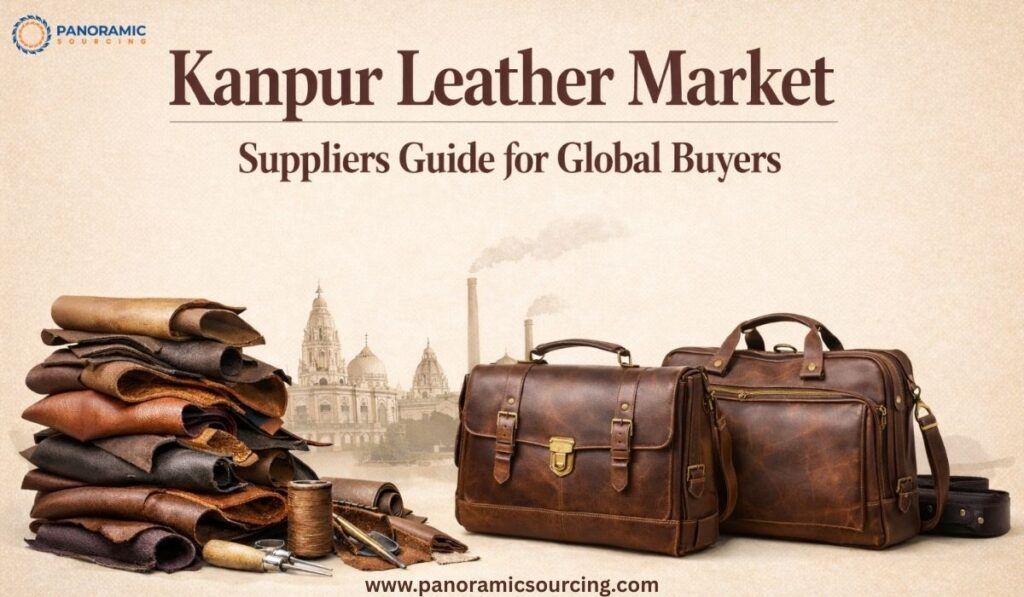
Kanpur Leather Market Suppliers Guide for Global Buyers
If you’re hunting for serious leather, you eventually end up in Kanpur. It’s not a choice; it’s a necessity. This place is the “Leather City” for a reason—it is the absolute heart of buffalo leather on the planet. For a global buyer, hitting the grid of Kanpur Leather Market Suppliers is like walking into a massive, loud, 150-year-old machine that spits out everything from rugged work boots to high-end saddles.
But don’t get it twisted. You aren’t walking into a clean showroom. You’re entering a maze of tanneries in Jajmau and hidden stitching units down narrow alleys. To actually win here, you have to look past the chaos and figure out which Kanpur Leather Market Suppliers are the real deal and which ones are just playing middleman with your margins. It’s about the smell of the raw hides and the sound of the drums—if it feels too sanitized, you’re probably in the wrong place.
Why Kanpur Still Owns the Buffalo Trade
The reason Kanpur Leather Market Suppliers are on the speed-dial of every major brand is simple: raw power. While other cities mess around with thin sheepskins, Kanpur handles the heavy stuff. It’s the kind of leather that actually lasts and takes a beating.
The Jajmau Backbone: This area is packed with hundreds of tanneries. The supply chain is so tight it’s almost claustrophobic. Hides move from the soak to the finishing table in days, not weeks.
Generation-Deep Skills: The guys here have been working buffalo hide for a century. Whether it’s safety gear for a German factory or a western saddle for Texas, they know the tension and the grain better than anyone.
The Zero-Travel Discount: Everything happens within a 20-mile radius. Tanning, cutting, stitching and packing. That lack of travel cost is why leather market suppliers can hit price points that make other hubs look expensive.
Separating the Pros from the Amateurs
Navigating this place is a grind. You have to know where the lines are drawn. If you go to the wrong cluster, you’re just wasting your flight money and your time.
The tanneries in Jajmau are where the big business starts. If you’re buying containers of finished leather, this is your zone. But if you need finished goods, you head into the specialized clusters. Some Kanpur Leather Market Suppliers do nothing but belts. Some only touch safety shoes. You want the specialist, not the “we do everything” guy who’s just outsourcing his own orders and marking up the price.
Lately, the smart leather market suppliers have finally started leaning into the green side of things. You’ll see more LWG (Leather Working Group) stamps now. It’s not just about the cheapest hide anymore; it’s about making sure the tannery isn’t a nightmare for the environment. For a global brand, that’s the only way to stay safe in today’s market. If a supplier can’t show you their water treatment setup or a SEDEX Global audit, you should probably walk away.
The Real-World Inspection Grind
When you’re standing in a Kanpur warehouse, you quickly realize that a “good price” is a trap if you aren’t watching the hides like a hawk. The reality of dealing with Kanpur Leather Market Suppliers is that the best stuff never just falls into your lap; you have to go in and pull it out yourself. It’s about knowing the difference between a hide that was rushed through the drum and one that was given the time to actually take the oils.
To survive the sourcing grind here, you’ve got to keep a few hard truths in mind:
Grain Over Shine: Never trust a high-gloss finish on a first sample. Suppliers often use it to hide scars or poor tanning. Always ask to see the “crust” leather before the final coat goes on.
The Drum Reality: A lot of Kanpur Leather Market Suppliers will try to skip the long-soak process to save on electricity. If the leather feels “papery” or stiff, they cut corners on the tanning time.
The Smell Test: Real, vegetable-tanned buffalo leather has a deep, earthy scent. If it smells like a swimming pool, they’re overdoing the chemicals and that leather is going to crack within six months.
Panoramic Sourcing: We Handle the Heat
Look, Kanpur is a goldmine, but it will eat you alive if you’re naive. You’ve got language gaps, shifting raw material costs and the “good sample, bad production” trap. That is exactly why Panoramic Sourcing exists.
We aren’t just an office; we’re your eyes in the factory. At Panoramic Sourcing, we spend our time in the heat of those units so you don’t have to. We know which Kanpur Leather Market Suppliers actually follow the rules and which ones are cutting corners on the tanning chemicals.
Our job at Panoramic Sourcing is to be the bridge. We handle the “in-between”—the constant back-and-forth on samples, the production delays and the final inspection before anything goes into a crate. We vet the leather market suppliers based on years of seeing who actually delivers. We handle the grit so you get the leather. We’re the filter that stops the headaches from reaching your desk.
Conclusion
Sourcing from Kanpur Leather Market Suppliers is a massive edge, but only if you have a map. The talent is there and the scale is huge, but it rewards the people who actually know how the tanneries work. From the thick hides of Jajmau to the final stitch in the city, Kanpur is still the gold standard for anything that needs to be durable.
You aren’t just buying a product; you’re tapping into an industrial legacy. Whether you’re a startup or a massive retailer, the capacity of the Kanpur leather market suppliers is unmatched. With Panoramic Sourcing handling the boots-on-the-ground reality, you can stop worrying about the “how” and start focusing on your brand. It’s a tough market, but the results are worth the sweat.
FAQs
1. What’s the main thing Kanpur Leather Market Suppliers are known for?
Buffalo leather. Period. If you need heavy-duty footwear, belts, or equestrian gear, this is the only place to be.
2. Can I find eco-friendly leather in Kanpur?
Yeah, the top-tier leather market suppliers are heavily invested in LWG certification and chrome-free tanning now.
3. How long does an order usually take?
Usually 45 to 90 days. It depends on the tanning cycle, which you can’t really rush if you want quality grain.
4. Are small orders okay?
Most big Kanpur Leather Market Suppliers want volume because of how tanning drums work, but you can find smaller units if you know where to look.
5. How does Panoramic Sourcing keep things on track?
We do unannounced factory visits, check the raw hides ourselves and run a multi-stage QC before any shipment gets the green light.