
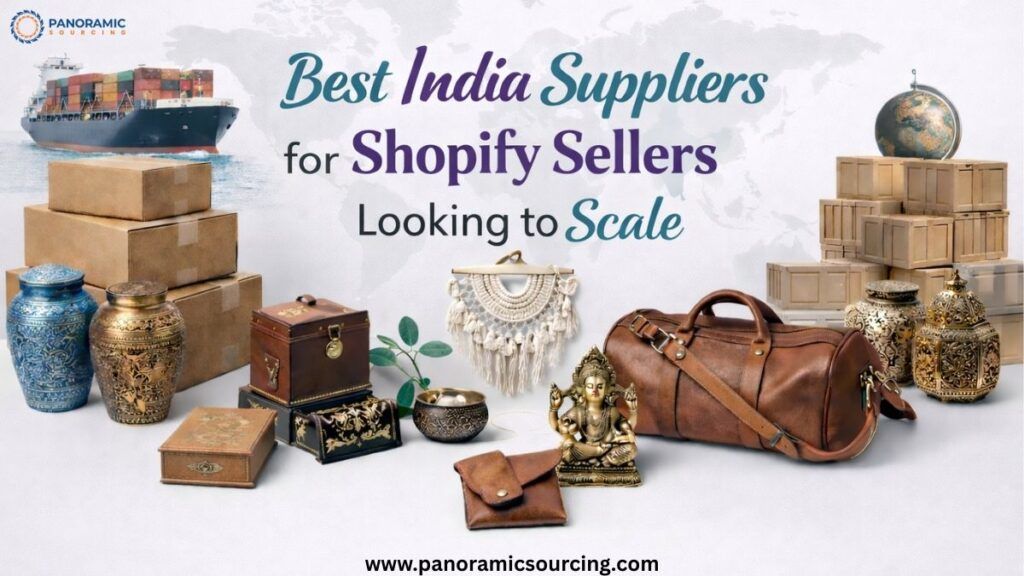
Best India Suppliers for Shopify Sellers Looking to Scale
A Practical Roadmap to Scaling with India suppliers for Shopify sellers
Scaling a Shopify brand in competitive markets like the United States and other global ecommerce hubs requires moving beyond generic catalog items toward a structured supply chain built around exclusivity and control. For growth-focused entrepreneurs, working with India Suppliers for Shopify Sellers is not just a sourcing decision — it is a strategic upgrade that enables brand ownership, margin expansion and long-term scalability across international markets.
India’s export ecosystem is uniquely positioned to support USA-based and global ecommerce businesses. Manufacturers increasingly offer startup-friendly production runs, professional private labeling services and export-ready logistics coordination designed for cross-border shipping. This allows Shopify sellers to launch differentiated products while maintaining operational flexibility. This guide explains the exact process international Shopify entrepreneurs should follow to identify trusted partners, negotiate favorable terms and convert supplier relationships into a scalable global supply system.
Step-by-Step Process to Find India suppliers for Shopify sellers
Finding the right manufacturer is not a single action. It is a structured evaluation process designed to minimize risk and maximize product consistency. Shopify sellers should treat supplier selection like hiring a business partner.
Step 1: Define Your Product and Branding Requirements
Before contacting India Suppliers for Shopify Sellers, clarify:
Target product category
Material specifications
Branding requirements
Packaging expectations
Estimated first order size
Long-term growth projection
Suppliers respond more professionally when entrepreneurs present structured briefs. A clear technical sheet speeds up sampling and prevents misunderstandings.
Step 2: Use Verified B2B Platforms and Export Directories
Search beyond general wholesale marketplaces. Specialized Indian directories provide access to export-ready manufacturers. Good sources include IndiaMART, TradeIndia and government-recognized export listings. These platforms help filter professional India suppliers for Shopify sellers that already ship internationally.
Shortlist 5–8 suppliers instead of committing immediately. Comparison improves negotiation leverage and quality assessment.
Evaluating Reliability of India suppliers for Shopify sellers
A supplier’s professionalism is measured by documentation and responsiveness. Always request proof of business legitimacy before placing orders.
Step 3: Verify Export Credentials
Ask for:
GST registration
Import Export Code (IEC)
Company registration certificate
Past export references
Professional India Suppliers for Shopify Sellers will share documents without hesitation. Hesitation is a red flag.
Step 4: Order Paid Samples Before Production
Never skip sampling. Paid samples simulate a real order and test:
Material accuracy
Craftsmanship
Color consistency
Packaging durability
Most serious India suppliers for Shopify sellers refund or credit the sample cost against bulk orders. Sampling protects your brand from scaling with flawed products.
Shopify sellers exploring India’s manufacturing landscape can review industry insights published by the India Brand Equity Foundation (IBEF), a government-supported body promoting Indian exports globally.
Negotiating Low MOQs with India suppliers for Shopify sellers
Startups often fear high inventory commitments. However, MOQ negotiation is more flexible than many assume.
Step 5: Position Yourself as a Growth Partner
Manufacturers reduce MOQs when they see long-term potential. Present your marketing strategy, Shopify store roadmap and forecasted scaling plan. Suppliers view you as an investment rather than a small buyer. Many India Suppliers for Shopify Sellers accept pilot runs of 50–100 units for promising brands.
Step 6: Use Tiered Pricing Agreements
Instead of pushing for the lowest price immediately, negotiate volume-based discounts:
Trial batch pricing
Growth-stage pricing
Bulk pricing tiers
This aligns incentives. Suppliers support your growth because scaling benefits both parties.
Private Label Setup with India suppliers for Shopify sellers
Private labeling is what turns a product into a brand asset.
Step 7: Create Branding Specifications
Provide suppliers with:
Logo files in vector format
Label dimensions
Packaging artwork
Tagline and compliance text
Color standards (Pantone references)
Professional India suppliers for Shopify sellers often have in-house packaging teams that refine your designs for manufacturing compatibility.
Step 8: Approve Pre-Production Mockups
Never mass-produce branding without visual confirmation. Ask for digital proofs or physical prototypes. This prevents costly packaging errors and protects brand identity.
Export and Logistics Process with India suppliers for Shopify sellers
Shipping is part of the product experience. A slow or damaged shipment affects customer perception.
Step 9: Choose the Right Shipping Model
Options include:
Express courier for small batches
Air freight for urgent restocks
Sea freight for bulk inventory
Experienced India Suppliers for Shopify Sellers coordinate freight forwarders and export paperwork. Choose suppliers near major ports to reduce domestic handling time.
Step 10: Conduct Final Quality Inspection
Before releasing final payment:
Request inspection photos
Review packing lists
Verify barcode labeling
Confirm carton strength
Third-party inspection agencies provide independent reports. Even top-tier India suppliers for Shopify sellers benefit from this extra checkpoint.
Scaling Through Long-Term Partnerships
Once trust is established, suppliers become strategic collaborators. Repeat orders improve consistency and unlock priority scheduling. Successful Shopify brands treat India Suppliers for Shopify Sellers as extensions of their internal operations.
Long-term relationships lead to faster sampling, flexible credit terms and early access to new product innovations.
Panoramic Sourcing: A Specialized Partner for Shopify Brands Working with India suppliers
While many manufacturers can produce goods, scaling a Shopify brand requires a sourcing partner that understands ecommerce speed, branding precision and startup-friendly flexibility. This is where Panoramic Sourcing stands out among India suppliers for Shopify sellers.
Panoramic Sourcing operates as a bridge between global Shopify entrepreneurs and vetted Indian factories. Instead of forcing sellers to navigate fragmented supplier networks alone, the company provides a structured sourcing ecosystem designed specifically for D2C brands.
Ecommerce-Focused Manufacturing Network
Unlike generic trading houses, Panoramic Sourcing works with export-ready factories that already understand ecommerce requirements:
Low MOQ pilot production
Private label packaging
Barcode and SKU compliance
Custom branding integration
Consistent quality control
Shopify-friendly fulfillment preparation
This specialization is critical because most traditional manufacturers are built for wholesale buyers, not agile online brands. Panoramic Sourcing filters factories that are comfortable working with scaling Shopify sellers and rapid restocking cycles.
End-to-End Process Management
Shopify sellers often struggle with fragmented communication between sampling, production, inspection and logistics. Panoramic Sourcing centralizes the process into a single workflow:
Supplier shortlisting and vetting
Sample development and refinement
MOQ negotiation
Private label execution
Production monitoring
Pre-shipment inspection
Export coordination
This structured pipeline reduces costly delays and protects brand consistency. For Shopify businesses, that reliability is more valuable than chasing the lowest manufacturing quote.
Quality Control Designed for Online Brands
Customer reviews determine ecommerce success. Panoramic Sourcing enforces inspection protocols that align with Shopify’s customer experience standards. Every production batch is reviewed for:
Material consistency
Branding accuracy
Packaging durability
Label placement
Export compliance
This reduces refund risk and protects seller reputation, which is essential for long-term growth.
Scalability Without Inventory Pressure
Many Shopify entrepreneurs fear committing to large inventory. Panoramic Sourcing negotiates startup-friendly MOQs while preparing factories for future scaling. As order volumes grow, sellers gain priority scheduling and better pricing tiers without changing suppliers.
This continuity allows brands to scale marketing aggressively, knowing their supply chain can support expansion.
Conclusion
Reliable sourcing is the backbone of ecommerce scalability. By following a structured process — verification, sampling, MOQ negotiation, branding control and logistics planning — Shopify entrepreneurs transform India suppliers into long-term growth infrastructure.
Scaling is not about finding the cheapest factory. It is about building a dependable system that protects quality, margins and customer trust. India’s manufacturing ecosystem provides the flexibility and craftsmanship needed to support that system.
FAQs
1. Can beginners work with Indian manufacturers?
Yes. Many factories now specialize in working with startup ecommerce brands.
2. How long does sampling usually take?
Most samples take 7–21 days depending on product complexity.
3. Are low MOQs realistic for private labeling?
Yes, especially when positioning yourself as a long-term growth partner.
4. Is third-party inspection necessary?
It is highly recommended for bulk shipments to protect brand quality.
5. Can suppliers ship directly to fulfillment centers?
Most export-ready manufacturers support warehouse delivery and labeling compliance.